Current listings
Airedale Terrier
Browse current Airedale Terrier listings on Petsify. Compare each animal's age, location and profile details, then contact its carer directly.
0 current listings

No active listings for this breed
Listings change over time. Browse the full catalog or set an alert and come back when a matching animal appears.
Read the full profile
Review the description, age, location and health information provided by the lister.
Check the lister
Open the shelter or breeder profile to see the information they have shared.
Watch for new listings
An alert helps you keep track of new matching listings on Petsify.
About the Airedale Terrier breed
- Size
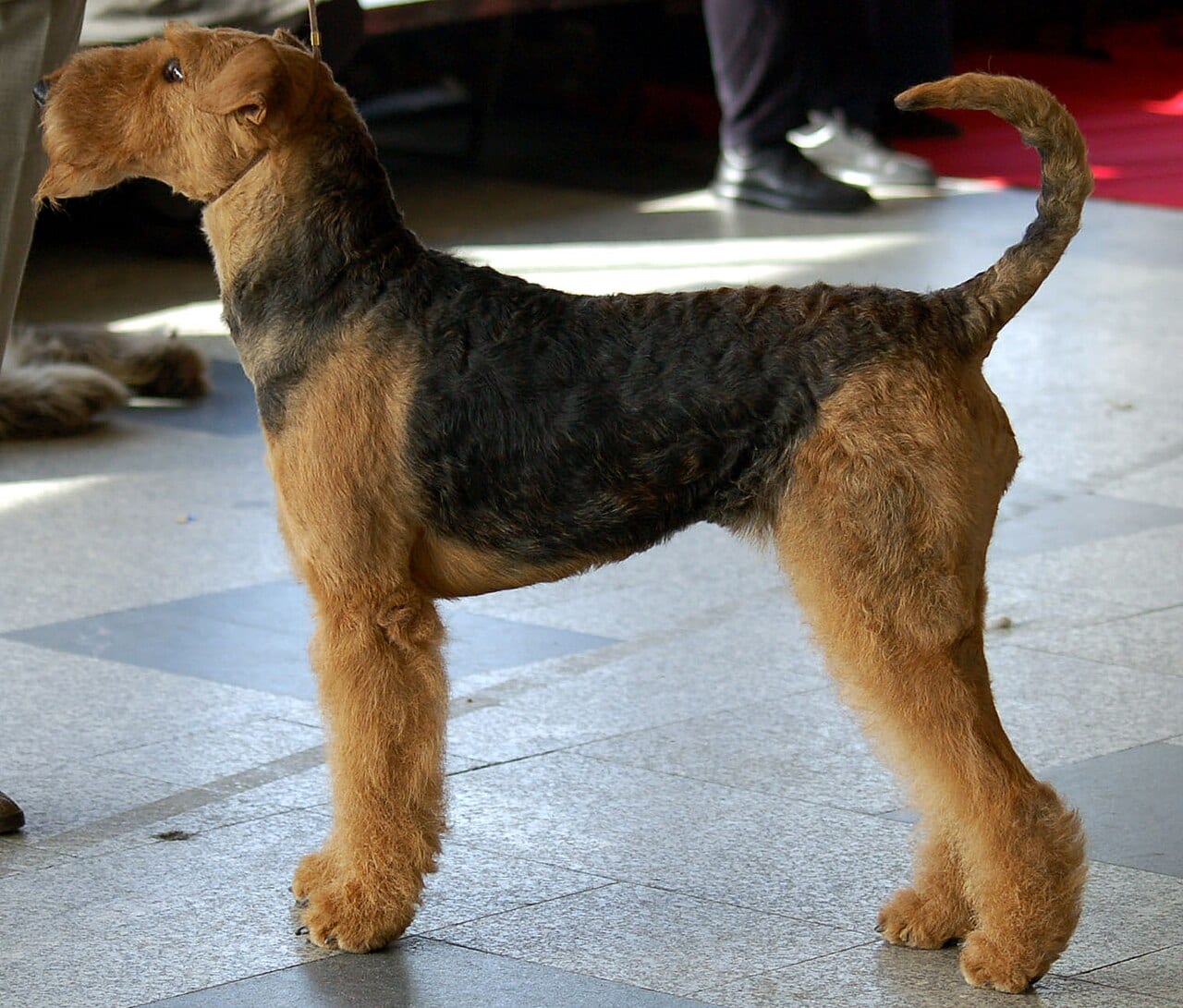
- Large terrier, about 56–61 cm at the withers
- Origin
- Yorkshire, Britain
- Coat
- Hard, dense and wiry
- Temperament
- Alert and self-assured
- Activity
- Daily exercise and engagement
Origin
The Airedale Terrier developed in Yorkshire, England, around the valleys of the Wharfe, Calder and Aire. It is the largest terrier breed and was once used for tracking and service work.
Temperament
The FCI describes the Airedale as sociable, self-assured, friendly, courageous and intelligent. It is alert and quick to respond to its surroundings. A particular dog's behaviour also reflects its socialisation, training and experience.
Size
A large, muscular terrier. Under the FCI standard, males are about 58–61 cm tall and females about 56–59 cm at the withers.
Grooming
The coat is dense, hard and wiry, with a shorter, softer undercoat. It needs regular brushing and coat care. The right approach to clipping or hand-stripping depends on the dog and its coat.
Activity
This is an active breed with a working background. Alongside walks, offer play, training and scent-based activities. Ask the dog's current carer about that individual's needs.
Who this breed suits
An Airedale may suit someone who can make time for exercise, training and regular coat care. Consider its size and lively temperament as part of everyday life. Before adopting, find out how the individual dog responds to children, other animals and new situations.